Galvo Scanners vs Gantry Motion in Laser Welding
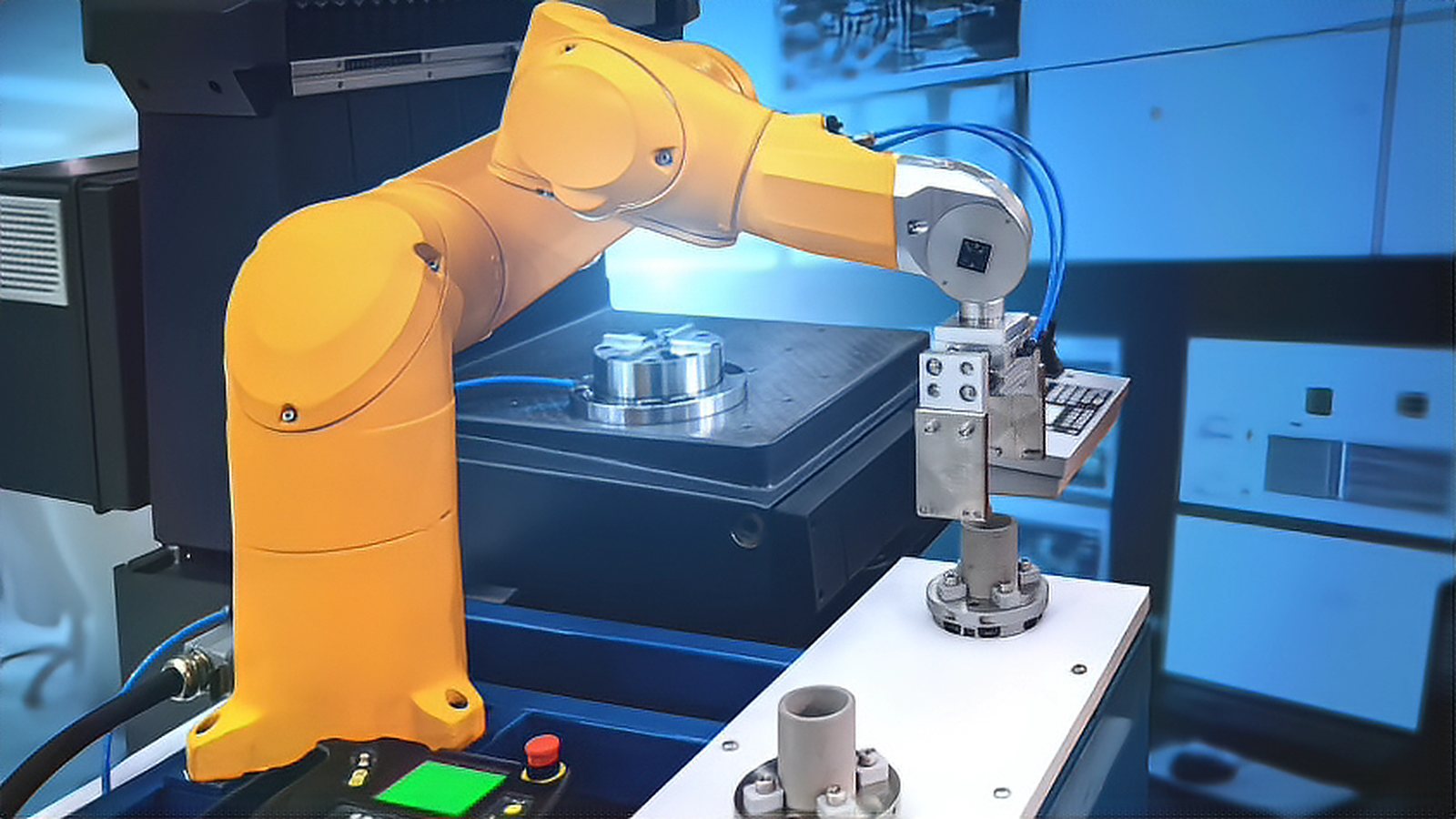
Galvo scanner laser welding and gantry motion can produce the same weld, yet they lead to very different cells, cycle times and cost structures. A galvo system steers a focused beam with two small mirrors and almost no moving mass, while a gantry moves a head or a part on heavy mechanical axes. That difference usually matters more than the laser source, because it fixes the working envelope, the achievable cycle time and the sensitivity to part variation. This article compares the two architectures on the criteria engineers actually argue about during specification, which are spot speed, field size, weld quality, integration cost and maintenance.
How the Spot Actually Moves
In a galvo system the beam leaves the source, enters the scanner, strikes two mirrors mounted on high speed motors and is focused by an F theta lens onto the work plane. The mirrors are light, so acceleration is high and the spot can jump across the field in a few milliseconds. The field is finite and distortion grows toward the edges, so the usable area depends on the lens and on how much edge error the joint can tolerate. High power welding scanners commonly cover a field between roughly 100 mm and 300 mm across, and a Z axis or a positioning robot is usually needed to place that field over a three dimensional part. In a gantry system the mass sits in the axes. A linear motor, a ballscrew or a rack and pinion moves the head or the table, the travel can be several meters, and accuracy stays consistent along the whole stroke, but acceleration is limited by the moving mass and the stiffness of the structure.
Where Each One Wins on Cycle Time
Galvo motion pays off when a part carries many short welds within a small area. The savings come from the jumps between welds rather than from a higher welding speed, so jump and settle time, scanner calibration and laser on time together decide the cycle. A process that spends most of its time welding one long seam gains far less. Gantry motion pays off when the weld is long, when the part is large, or when the part must be moved anyway for loading and unloading. Feed rates can be high with linear motors, but every reversal and every corner carries an acceleration penalty, and the fixture mass becomes part of the equation. A common answer for parts that need both is a gantry or a robot that positions the scanner while the scanner handles the fast detail. That hybrid keeps the envelope large and the stitching fast, at the cost of two control systems to tune and one more calibration to maintain.
Process Effects That Follow the Architecture
Geometry changes the weld, and the two architectures expose the joint to different geometry. A galvo delivers the beam at an angle that varies across the field, which shifts the apparent spot, changes coupling and can tilt the keyhole, while focus position drifts across a flat field, so a recipe tuned at the center may run shallower in the corner. The same angular freedom is useful, because a scanner can reach around an obstruction or approach a joint from an angle a gantry cannot, and it can superimpose a wobble or a shaped path in software with no mechanical change. A gantry keeps the beam close to normal to the surface over the whole stroke, which makes deep penetration, coaxial gas delivery and coaxial monitoring easier to control. A fast galvo move can also outrun keyhole stability when the acceleration profile is aggressive, which shows up as spatter or an uneven crown, so the motion profile belongs in the process recipe.
Cost, Integration and Maintenance
The cost profile differs in kind, not only in amount. A scanner and its lens are expensive, the price rises quickly with field size and edge focus quality, and the protective glass in front of the optics is a consumable that sees spatter every shift. Calibration and lens cleaning add routine work, and a damaged lens is a long lead time item. Gantry axes scale with stroke length and precision, consume floor space and bring more wear items, yet they are assembled from components that local maintenance can usually replace without waiting on a specialist. Whichever route is chosen, protective glass, calibration interval and spare parts stock should appear in the specification, because those three items decide how many hours the cell is actually available in its second year.
Choose for the Part Mix You Expect
Start from the part rather than from the technology. If the welds are short, numerous and tightly grouped, and the parts are small enough to sit inside a scanner field, a galvo cell will usually beat a gantry on cycle time and floor space. If the seams are long, the parts are large or the fixture is heavy, a gantry or a robot is the more honest answer. When the future part mix is uncertain, favor the architecture that leaves room for another station, and check that the control system can accept a second scanner or an extra axis later. Ask each supplier to quote both options against the same takt time, because the comparison only means something when both designs are sized to the same production requirement.
Bring two or three real parts to the discussion and ask each supplier to explain how the beam reaches every weld on them, including the awkward one in the corner. That question exposes which architecture is genuinely suitable and which one is being sold because it is familiar. Once the geometry is settled, put the field size, the positioning accuracy, the protective glass part number and the calibration interval into the specification so the comparison stays honest through quotation.
Comments (0)
No comments yet.
Sign in to join the discussion.