Fume Extraction and Air Quality in Laser Processing
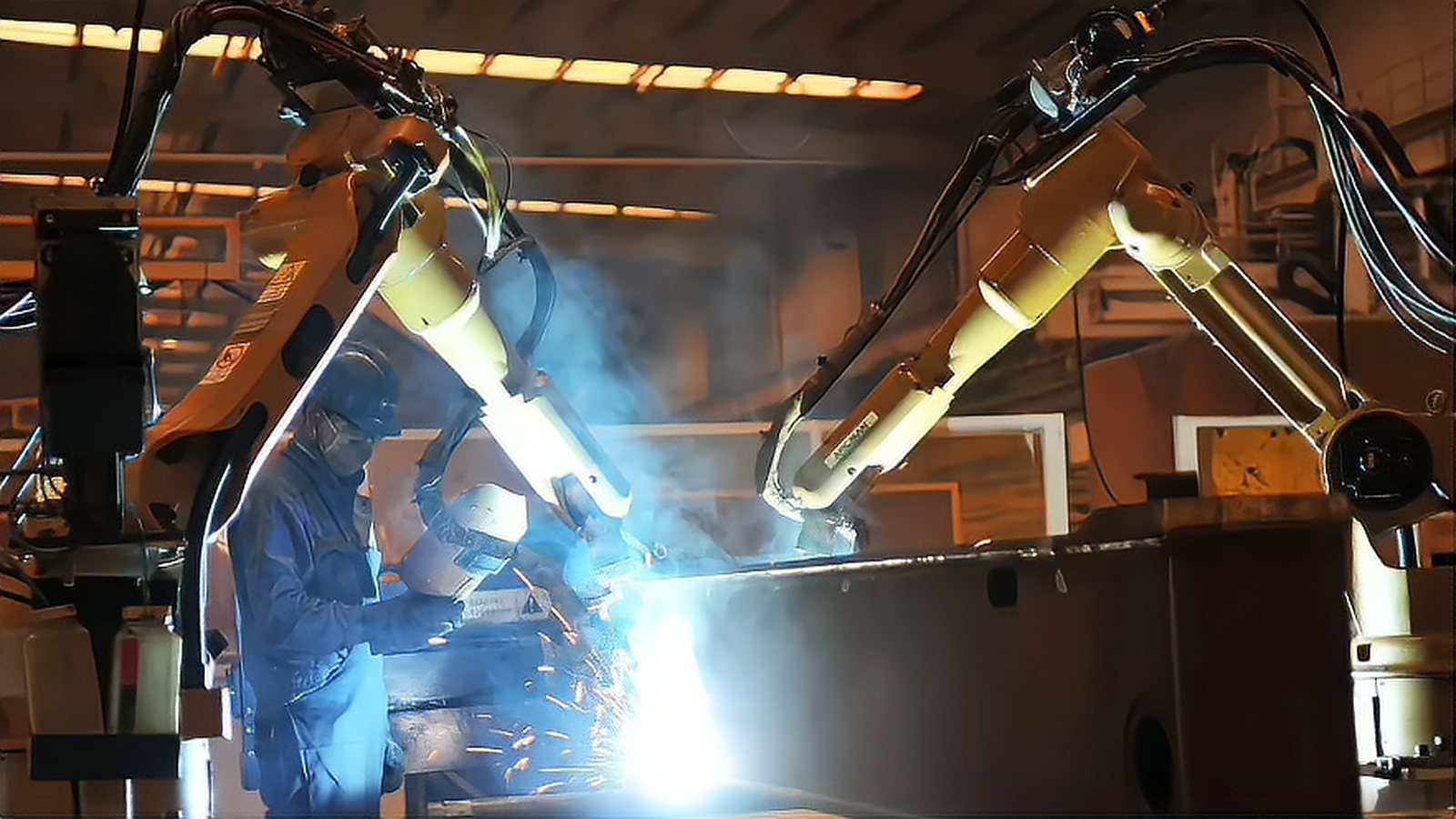
Laser fume extraction decides whether an operator breathes metal oxide particles or clean air, and it also decides how often the optics and the shop floor need cleaning. A system that looks adequate on paper often fails in practice because the hood sits too far from the plume or because the filter class was chosen for dust rather than for submicron condensate. This article covers what a laser plume actually contains, where the capture point has to sit to be effective, how filter grades are selected, and how to prove that the system still works months after commissioning.
What the Plume Contains
Laser processing vaporizes a small amount of metal together with any coating on it, and that vapor condenses into particles that are mostly below one micrometer in diameter. Mild steel produces mostly iron oxide, stainless steel adds nickel and chromium compounds, galvanized steel adds zinc oxide, and aluminum alloys produce a light oxide fume that stays airborne for a long time. Any organic coating, oil or plastic contributes carbonaceous particles and organic vapor that a particle filter alone will not capture. Gases can also form, notably ozone and nitrogen oxides when the beam runs in air without adequate shielding. Welding or cutting stainless steel can generate hexavalent chromium, which OSHA regulates under 29 CFR 1910.1026 (https://www.osha.gov/hexavalent-chromium).
Exposure Limits Set the Target
The design target is not the absence of visible haze but a measured concentration below the applicable limit. OSHA publishes permissible exposure limits for air contaminants, and NIOSH recommends lower values in its Pocket Guide to Chemical Hazards (https://www.cdc.gov/niosh/npg/) for substances such as manganese, nickel and chromium. Manganese deserves particular attention when cutting high strength steels, because its fume is fine and the recommended limits are tight. These values are protective ceilings rather than design suggestions, so a system should be sized to hold concentrations well below them instead of hovering at the line.
Capture Is a Distance Problem
Airborne capture efficiency falls steeply as the hood moves away from the source. A nozzle sitting within a few centimeters of the weld or cut point can pull in a large share of the plume, while the same nozzle half a meter away may capture only a small fraction. That is why the strongest setups use a coaxial extraction nozzle around the optics or a plenum that surrounds the tool, both of which keep the opening close to the plume without blowing the melt pool around. Exhausting the cabin alone is a supplement rather than a substitute, because by the time the plume drifts to the cabin wall it has already mixed with a large volume of room air. A gentle air curtain across the cabin opening can steer flow toward the exhaust, but it must not be strong enough to push fume past the operator.
Ducting decides whether the capture point keeps working once the system is installed. Industrial ventilation practice, as described in ANSI Z9.2, treats the velocity at the capture point as the quantity to maintain and sizes duct transport velocity well above the settling speed of the particles. In practical terms this means keeping flexible duct short and smooth, minimizing elbows, and fitting each branch with a damper so that adding a second station does not rob the first. A pressure gauge across the filter tells the operator the moment the media loads and the flow drops, which matters far more than a sticker with a replacement date.
Filter Stages and Class Ratings
A well designed unit uses at least three stages. A prefilter catches larger particles and protects the main element, the main filter retains submicron particles to a class defined in EN 1822 where H13 and H14 are the common choices, and a final bed of activated carbon handles gases, odors and organic vapor. Because the carbon stage ages independently of the particle stages, its life should be tracked separately. Filters are changed when the pressure drop reaches the manufacturer limit, not on a calendar. Aluminum and titanium dusts introduce an additional explosion hazard and should be handled according to guidance for combustible metals such as NFPA 484, which calls for avoiding dry accumulation and using suitable construction.
The choice between recirculating filtered air and sending it outdoors follows from the same reasoning. Recirculation saves energy and simplifies installation, but it places the whole burden of protection on the filter train and demands monitoring that proves the train still works. Exhausting to atmosphere removes that dependency and moves the problem to the stack, where the discharge must clear air intakes and satisfy the local permit. Where hexavalent chromium or other regulated carcinogens are present, many facilities treat the air as single use.
Verify Before You Trust It
Commissioning should include a smoke test at the capture point and a measurement of particulate concentration in the breathing zone, repeated after any change to the process or the fixture. Routine checks are short: read the pressure gauge, look for visible fume escaping the cabin, and confirm the nozzle has not been knocked out of alignment between shifts. When a new job arrives, cut a few coupons in the target material, watch where the plume actually goes, and reposition the hood before writing the program rather than after.
Comments (0)
No comments yet.
Sign in to join the discussion.