Laser Welding Carbon Steel: Chemistry, Thickness and Process Windows
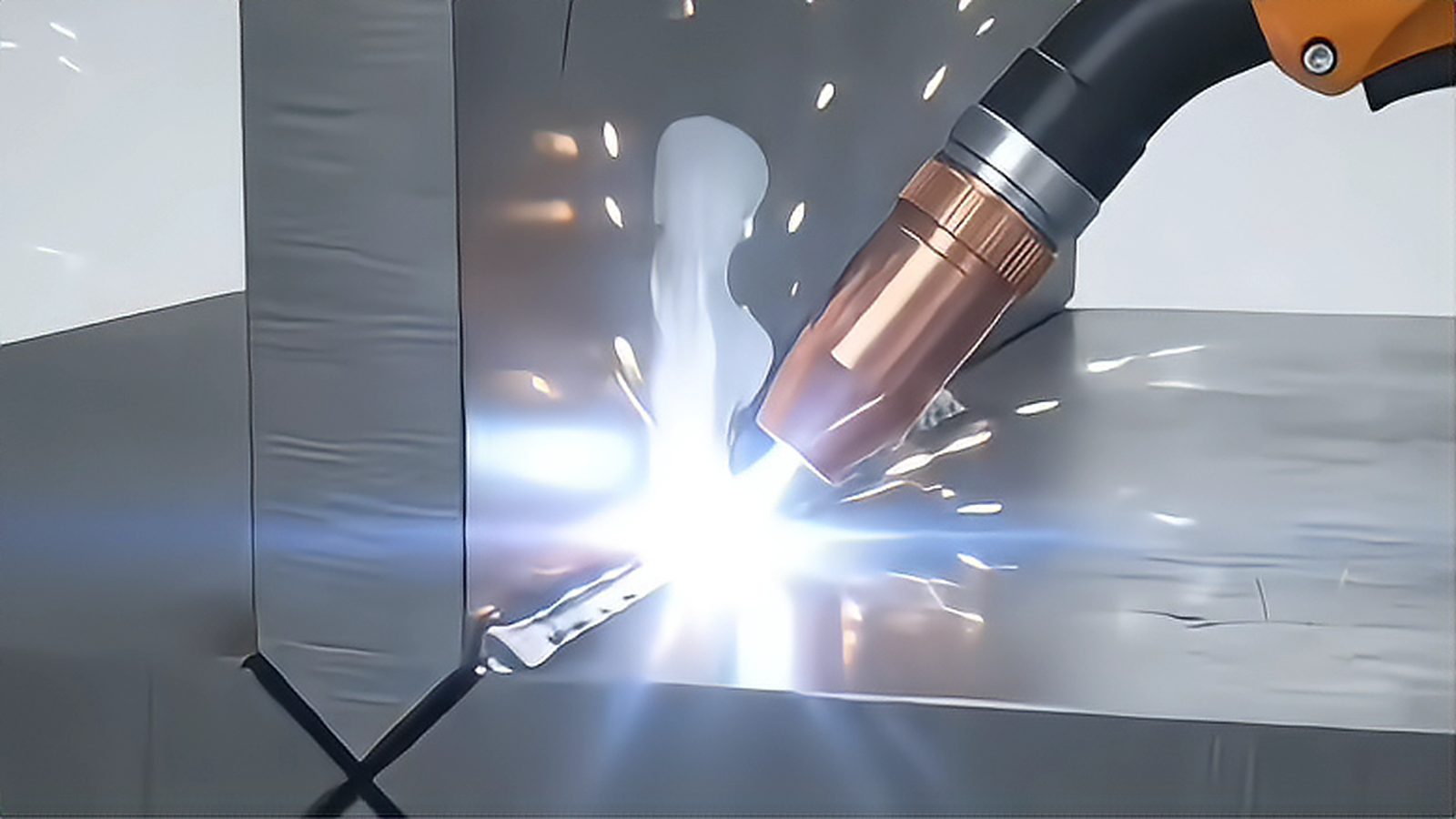
Carbon steel is the material most laser welding procedures are built around. The process window is broad, coupling is predictable, and most low-carbon grades tolerate the fast cooling a laser produces. That reputation is deserved, but it hides where carbon steel causes trouble, because an unusual chemistry, a rimmed rather than killed steel, mill scale or a zinc coating can make an easy job difficult, and the rules in ISO 13919-1 still apply.
Why carbon steel is forgiving, and where it is not
Low-carbon steel welds readily because it has little carbon to drive hardening, and at laser cooling rates the structure is usually still tough. The window between too little penetration and too much energy is wide, so the process tolerates normal variation in fit-up and cleanliness. Move up the carbon range, or add enough alloying to raise hardenability, and that changes, because such steels can form hard, crack-sensitive structures, and restraint decides whether a hard zone cracks.
Carbon equivalent and hardenability
Hardenability depends on the whole composition rather than carbon alone, so the industry uses a carbon equivalent to combine carbon with the other alloying elements. ISO/TR 17671-2:2002 sets out recommendations for welding ferritic steels and includes carbon equivalent and CET methods for judging how a steel will respond. A higher carbon equivalent means the steel hardens more readily at a given cooling rate, so a laser weld is more likely to leave a hard, brittle zone. Preheat to slow cooling through the hardening range, and consider post-weld treatment where hardness matters.
Grouping steels for procedure qualification
Procedures are not written for every grade in isolation. ISO 15608:2025 provides a grouping system for metallic materials, which lets a qualified procedure cover a family of similar steels rather than a single specification. Grouping is a convenience for qualification, not a guarantee of weldability, because two steels in the same group can differ in sulphur level, deoxidation or surface condition.
Sulphur, phosphorus and residual elements
Minor elements in the specification can still change the weld. Sulphur and phosphorus affect the surface tension and flow of the molten pool, which can alter penetration shape and the tendency to form defects, so they are kept low for laser welding and are hard to correct later, as the wider picture of welding defects shows. Deoxidation matters too, because rimmed steel is not fully deoxidised and can evolve gas during welding, producing porosity, so killed steel is usual.
Thickness ranges and single-pass limits
Thickness changes the strategy more than any other variable. Thin sheet is dominated by fit-up and heat accumulation, where the risk is usually too much energy rather than too little, while medium sections suit single-pass keyhole welding. Beyond a certain thickness a single pass becomes marginal, and with high-power sources penetration typically reaches a few millimetres, though the figure depends on power, spot size and material, so treat it as a typical capability, not a guarantee. Past that point the options are multipass and narrow-gap welding or filler, the trade-off seen in cutting thick steel.
Surface condition
Mill scale, rust, oil and rolling oxide sit between the beam and clean metal, and each changes the result. Scale and oxide alter how energy couples into the surface and can contribute to porosity and spatter, oil and moisture vaporise and do the same, and heavy rust makes the outcome unpredictable from part to part. Cleaning is a real cost, so choose deliberately between mechanical preparation, laser cleaning and accepting the surface as it comes.
Shielding gas choices
Argon is the usual baseline for laser welding carbon steel and is adequate for many jobs. Helium, alone or mixed, helps penetration or speed on thicker sections, because it produces a hotter, wider plume. Carbon dioxide is the one to avoid, because additions borrowed from arc practice affect plasma behaviour and the melt, and at laser power densities the result is often more spatter and less control, as the guide to laser welding parameters sets out.
Coated and plated steel
Coatings add a layer that must be dealt with before the metal melts. TWI's study of laser welding automotive steel notes that zinc boils at about 906 degrees Celsius, far below the melting point of steel, and that coatings thicker than roughly five micrometres make porosity likely, because vapour has to escape through a pool that is still solidifying. That vapour can blow the pool around, generate spatter and leave porosity, so coated material is usually welded with extra attention to fit-up, a small controlled gap to vent vapour, and a stable plume.
Zinc fume and ventilation
Zinc fume deserves respect for health reasons as well as process. OSHA, in its guidance on welding, cutting and brazing, notes that welding fumes and gases can harm the respiratory system, and it advises engineering controls such as ventilation and extraction before relying on personal protection, as OSHA Fact Sheet 3647 sets out. For coated steel this means local extraction at the weld rather than a general roof fan, part of the discipline covered in the material on fume extraction and air quality.
Quality checks and typical acceptance
Acceptance usually rests on a few checks: how the weld looks, what a cross-section shows, and how hard the heat-affected zone has become, judged against the quality levels your drawing invokes, such as ISO 13919-1:2019. Appearance cannot confirm what happened at depth, so keep cross-section examination in the plan at a sampling rate that reflects the part's criticality, and combine it with process records so an unexpected result can be traced.
The key with carbon steel is to confirm the grade and the deoxidation practice first, then the surface and coating, and only then the parameters. Chemistry and surface set the challenge, and the machine settings only decide how well you meet it.
Sources and references
- ISO/TR 17671-2:2002 Welding - Recommendations for welding of metallic materials - Part 2: Arc welding of ferritic steels - Includes carbon equivalent and CET methods for judging the hardenability of ferritic steels View source
- ISO 15608:2025 Welding - Grouping system for metallic materials - Provides the material grouping system used when planning procedure qualification View source
- TWI, Laser welding automotive steel and aluminium, 2000 - Notes that zinc boils near 906 degrees Celsius and that coatings above roughly five micrometres promote porosity View source
- OSHA, Welding, Cutting, and Brazing - Covers welding fume and gas hazards, including zinc fume, and describes control measures View source
- OSHA Fact Sheet 3647, Controlling Hazardous Fume and Gases during Welding - Summarises practical controls for welding fume and gases View source
- ISO 13919-1:2019 Electron and laser-beam welded joints - Quality levels for imperfections - Part 1: Steel, nickel, titanium and their alloys - Defines the B, C and D quality levels used to accept laser welds in steel View source
Comments (0)
No comments yet.
Sign in to join the discussion.